Adoption, Pregnancy, and Parenthood: Why Every Family Transition Changes Relationships
When people think about growing their family, they often focus on the obvious changes.
A nursery.
A crib.
Paperwork.
Appointments.
Baby showers.
Adoption agencies.
Feeding schedules.
School drop-offs.
But one thing that often catches people by surprise is this:
Every family transition changes the relationship.
Not because something has gone wrong.
Not because the relationship is weak.
But because adding a new person to a family system changes the system itself.
Whether through pregnancy, adoption, fostering, surrogacy, or welcoming another child, every transition requires adjustment.
And adjustment can be both beautiful and challenging.
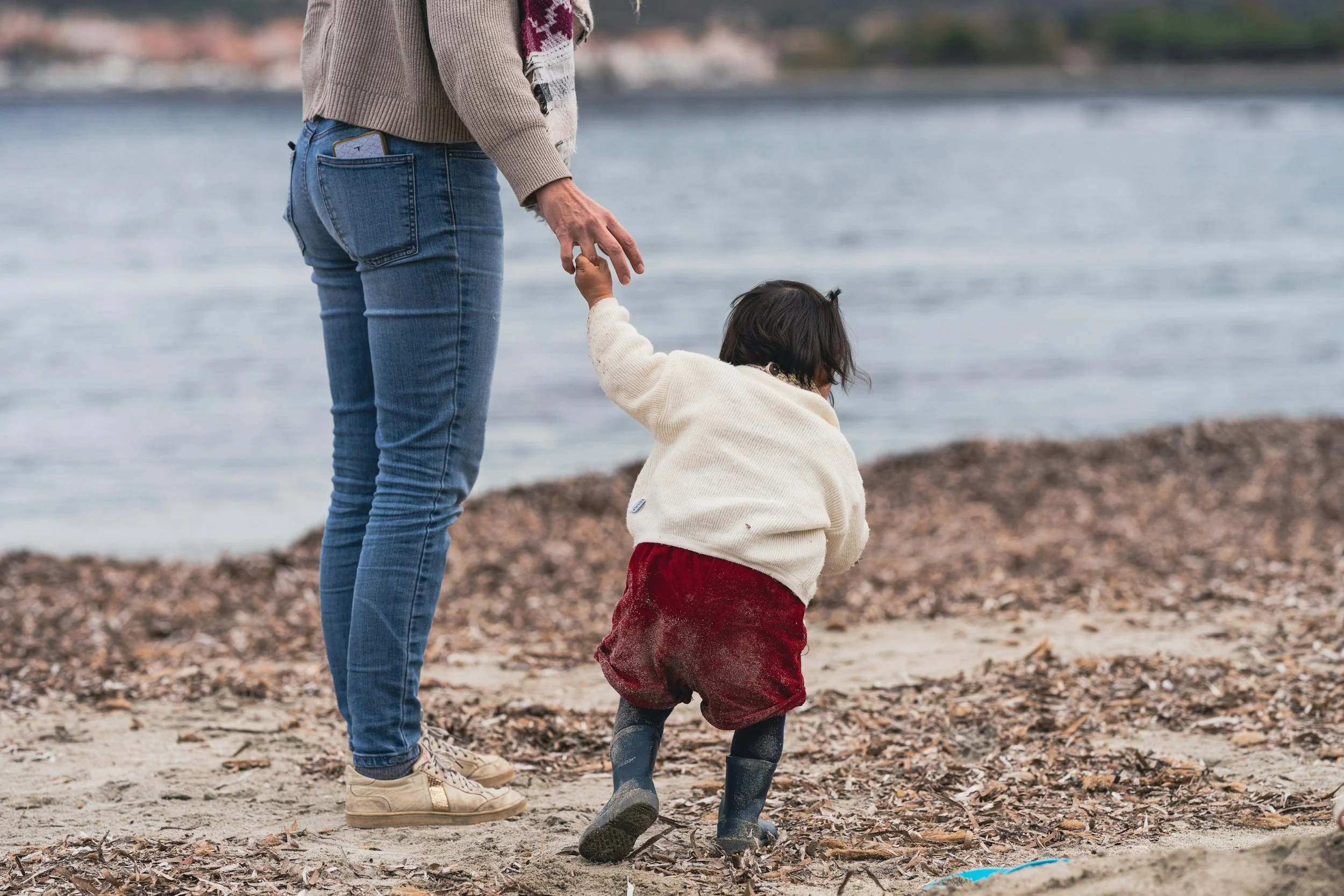
A parent gently guiding a young child along the shoreline, symbolizing the transition into parenthood and the evolving dynamics that occur within relationships when families grow. This image reflects themes of parenting, family adjustment, emotional connection, and navigating major life transitions together.
Family Systems Are Designed to Change
One of the most helpful ways to understand relationships is through a family systems lens.
Family systems theory suggests that families function as interconnected systems. When one part of the system changes, every other part must adapt.
Think about a mobile hanging above a crib.
When one piece moves, every other piece shifts as well.
Families work similarly.
When a baby arrives, an adoption is finalized, or a child joins the family through fostering, everyone adjusts.
Roles shift.
Expectations change.
Responsibilities increase.
Dynamics evolve.
This isn't a sign of dysfunction.
It's a normal part of growth.
The Myth That Love Makes the Transition Easy
One of the most common misconceptions about parenthood and adoption is that love will naturally carry people through every challenge.
Love matters.
Deeply.
But love does not eliminate stress.
Love does not remove sleep deprivation.
Love does not automatically solve communication challenges.
Love does not erase grief, uncertainty, or overwhelm.
The strongest families aren't the ones who avoid these experiences.
They're the ones who learn how to navigate them together.
Pregnancy Changes More Than Your Body
When people think about pregnancy, they often focus on physical changes.
But pregnancy also impacts:
Identity
Relationships
Expectations
Roles
Emotional wellbeing
Many couples begin experiencing changes long before a baby arrives.
Questions emerge such as:
What kind of parent will I be?
How will our relationship change?
Will we still feel connected?
How will we divide responsibilities?
What if we parent differently?
These are healthy questions.
They reflect the reality that becoming a parent is not simply adding a child.
It's becoming a different version of yourself.
Adoption Brings Its Own Unique Transition
While pregnancy receives significant attention, adoption often involves its own emotional complexities.
Adoption can include:
Long periods of uncertainty
Financial stress
Grief and loss
Identity questions
Attachment concerns
Changes in expectations
Many adoptive parents experience a mixture of emotions.
Joy.
Excitement.
Relief.
Fear.
Pressure.
Overwhelm.
Research from the Child Welfare Information Gateway highlights that adoptive families often benefit from ongoing support as they navigate adjustment, attachment, and changing family dynamics.
Like all forms of parenthood, adoption is both meaningful and demanding.
Every Child Changes the Family Differently
One of the most important things I tell parents is this:
The transition from 0 children to 1 child is different than the transition from 1 child to 2.
And the transition from 2 children to 3 can be different again.
Every addition changes the family system.
The challenges evolve.
The routines shift.
The emotional needs expand.
Parents often assume that because they've done it before, the next transition will feel the same.
It rarely does.
Each child enters a unique family system at a unique moment in time.
Relationship Challenges Are Often About Adjustment, Not Failure
One of the most painful assumptions couples make is believing that increased conflict means something is wrong.
In reality, many disagreements during family transitions are rooted in adjustment.
Questions arise around:
Division of labor
Parenting styles
Financial priorities
Family boundaries
Emotional needs
Time management
These conversations can feel intense because the stakes feel high.
But conflict itself is not necessarily the problem.
How couples navigate conflict matters far more.
Research from the Gottman Institute consistently shows that healthy relationships are not conflict-free.
They are relationships where repair, communication, and emotional responsiveness occur regularly.
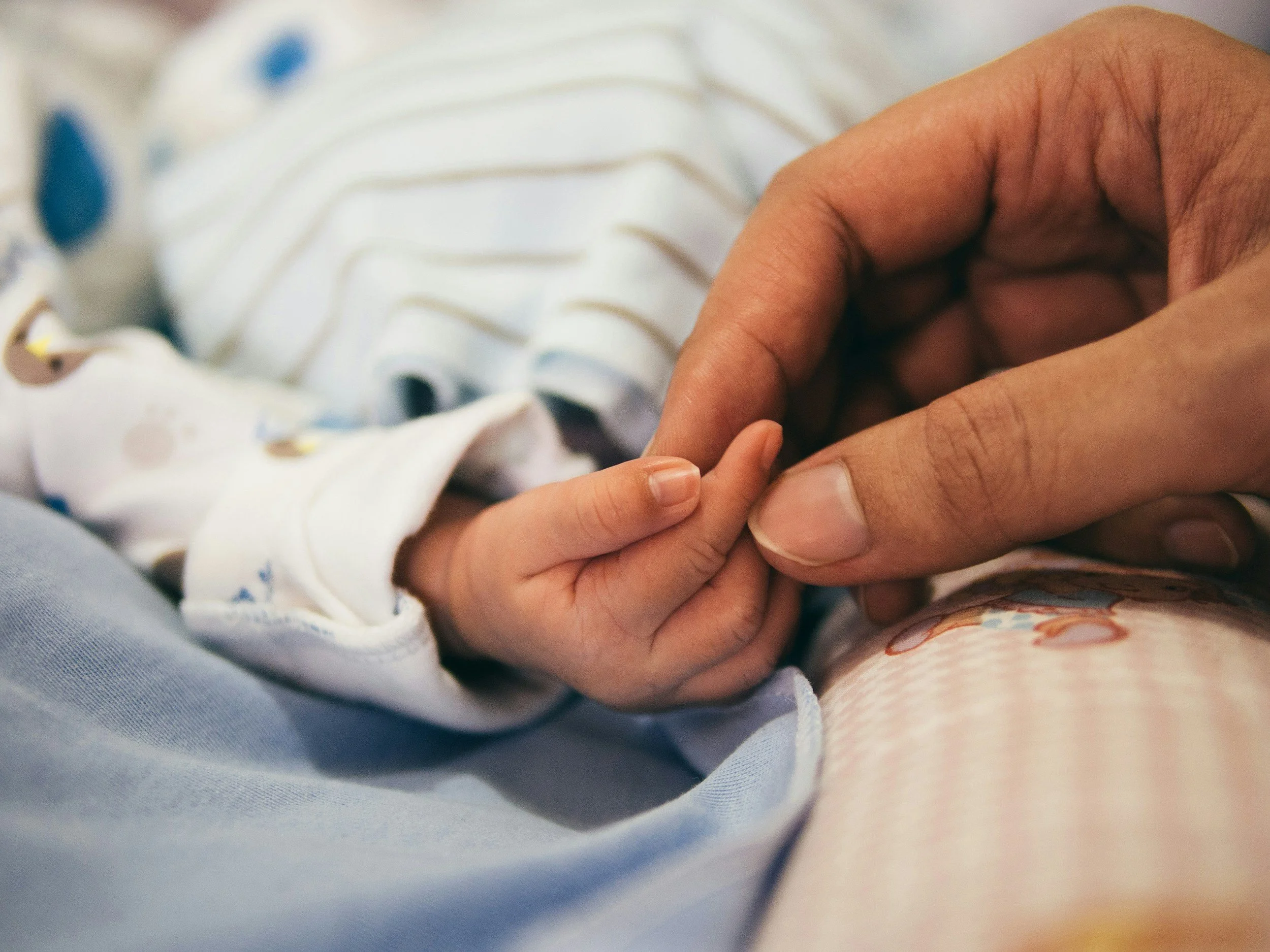
A close-up image of a newborn holding a parent's finger, symbolizing connection, attachment, and the profound emotional and relational shifts that occur during pregnancy, adoption, and early parenthood. This image supports discussions about family transitions, maternal mental health, and maintaining strong relationships during life changes.
Grief Often Exists Alongside Gratitude
This is something many parents and adoptive families don't expect.
You can deeply love your family and still grieve what has changed.
You may miss:
Freedom
Spontaneity
Simplicity
Sleep
Certain aspects of your identity
Acknowledging these losses doesn't mean you're ungrateful.
It means you're human.
Growth often involves both gain and loss.
The healthiest families make space for both experiences.
How to Stay Connected During Family Transitions
Talk About More Than Logistics
Many couples become excellent co-managers.
They discuss:
Schedules
Pickups
Meals
Appointments
But emotional connection often gets lost beneath logistics.
Remember to ask:
"How are you doing?"
Not just:
"What needs to get done?"
Expect Adjustment
Transitions are not problems to solve.
They're seasons to navigate.
Give yourself and your partner permission to be learning.
Stay Curious About Each Other
The person you fell in love with is growing.
You are too.
Continue getting to know each other.
Ask questions.
Listen deeply.
Remain curious.
Seek Support Early
Support works best before disconnection becomes entrenched.
You don't have to wait until things feel unmanageable.
Therapy Can Help Families Navigate Change
Major family transitions often bring:
Anxiety
Relationship strain
Identity shifts
Emotional overwhelm
Communication challenges
Therapy provides a space to process these changes with support and intention.
Whether you're expecting a baby, pursuing adoption, adjusting to parenthood, or growing your family in another way, you don't have to navigate it alone.
Final Thoughts From Anna McDonald
Every family transition changes relationships.
That's not a warning.
It's simply reality.
Families are living systems.
And living systems adapt.
The goal isn't preventing change.
The goal is learning how to move through it together.
With compassion.
With communication.
And with enough support to help you stay connected along the way.
Therapy for Individuals, Couples, and Growing Families in California
I provide virtual therapy throughout California for individuals and couples navigating:
Pregnancy
Adoption
Perinatal mental health
Parenthood
Relationship transitions
Anxiety
Couples therapy
Therapy intensives
If you're moving through a family transition and would like support, I'd love to help.
Reach out to schedule a consultation or join my waitlist for upcoming availability.